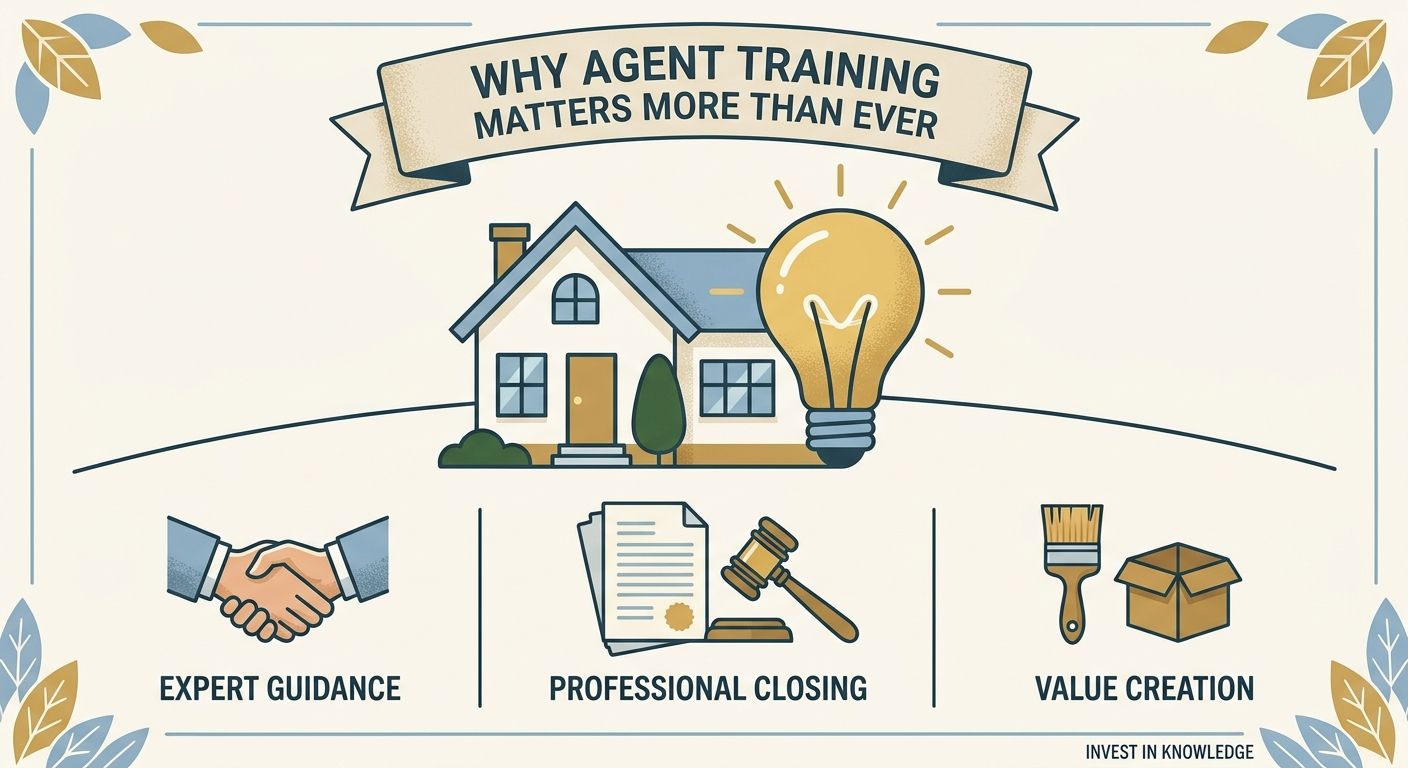
Why Agent Training Matters More Than Ever in Today's Real Estate Market
Why Agent Training Matters More Than Ever in Today's Real Estate Market
The 2024 NAR settlement changed how buyer agent compensation works, and agents now need a written buyer agreement in place before touring homes with a client. That single shift has made structured, ongoing training — not just a pre-license course you take once — the difference between agents who are thriving in this market and agents who are struggling to explain their value.
If you're a licensed agent — or thinking about becoming one — in Martinsburg, Charles Town, or anywhere across the Eastern Panhandle, you've probably noticed the business looks different than it did even three or four years ago. Commission conversations happen earlier and more explicitly. Buyer agreements are now a required first step, not a formality. And clients, armed with more information than ever, expect their agent to explain exactly what they're paying for.
None of that is a reason to worry. It's a reason to get better trained than the agent down the street.
What Actually Changed
Buyer representation used to be implied. A buyer would tour homes with an agent, and compensation flowed through the listing side without much discussion. That structure is gone. Buyer agents are now required to have signed agreements in place before showing property, with compensation negotiated directly and disclosed clearly rather than assumed.
For agents who came up under the old system, that's a real adjustment. For agents entering the business now, it means the fundamentals of the job — communicating value, presenting an agreement, explaining what a client is actually paying for and why — are no longer soft skills. They're the job.
Why This Raises the Stakes on Training
A pre-license course teaches you enough to pass a state exam. It doesn't teach you how to sit across from a buyer and explain a compensation agreement with confidence, or how to handle the moment a client asks why they should sign anything at all. That's a skill, and skills get built through practice, mentorship, and real transaction experience — not a one-time class.
The agents who are thriving right now share a few things in common:
They can explain buyer agreements clearly, without sounding defensive or scripted
They understand the compliance side well enough that it never becomes a liability
They've been mentored through real negotiations, not just talked through them in a classroom
They keep learning as the rules keep shifting, instead of treating their license as a finished credential
None of that happens by accident. It happens because a brokerage takes training seriously and builds it into how agents actually work, not just how they get licensed.
What This Means If You're Choosing a Brokerage
If you're newly licensed or considering a move, the brand name on the sign matters far less than what happens on your first ten transactions. Prioritize training, mentorship, and how a brokerage actually supports its agents through the moments that are hardest to get right — over commission splits or name recognition alone.
Ask direct questions before you commit:
What does onboarding actually look like in the first 90 days?
Who do I go to when I'm not sure how to handle a specific transaction?
How does the brokerage keep agents current as rules and forms change?
Am I learning this business alongside people who've actually done it, or mostly on my own?
A brokerage that can answer those clearly is one built around developing agents, not just recruiting them.
Why This Matters in the Eastern Panhandle Specifically
Berkeley County and the broader Eastern Panhandle have been through real change lately — steady growth, a wave of buyers relocating from Northern Virginia, Maryland, and DC, and a market that rewards agents who understand both the local terrain and the current rules of the transaction. Clients here are comparing their options, often against agents and brokerages back in the DMV, and they notice the difference between an agent who's confident and current and one who's improvising.
That's exactly the environment where solid training stops being a nice-to-have and becomes what actually separates agents who build a real business here from agents who struggle to get past their first few closings.
Frequently Asked Questions
Why did buyer agent compensation change in real estate?
The 2024 NAR settlement changed how buyer agent compensation is communicated and documented, moving the industry away from compensation being assumed through the MLS and toward direct, written agreements negotiated between agent and buyer.
Do real estate agents need a written buyer agreement now?
Yes. As of 2026, buyer agents are required to have a written agreement with their client in place before touring homes, with compensation negotiated and disclosed directly rather than assumed from the listing side.
What should a new real estate agent look for in a brokerage?
Training, mentorship, and how the brokerage supports agents through real transactions matter more than commission splits or brand recognition. Ask what onboarding looks like, who agents can turn to with questions, and how the brokerage keeps agents current on changing rules.
Is real estate still a good career in 2026?
Yes, for agents willing to treat it as a profession that requires ongoing training rather than a one-time credential. The regulatory changes have created real opportunity for agents who communicate clearly, understand compliance, and build genuine trust with clients.
How is the Eastern Panhandle real estate market different from other parts of West Virginia?
The Eastern Panhandle, including Berkeley and Jefferson counties, sees a steady flow of buyers relocating from Northern Virginia, Maryland, and DC, which creates a client base that's often comparing agents against what they experienced in higher-cost markets, raising the bar for local agent professionalism.
If you're a licensed agent thinking about where you want to build your career, or you're weighing whether real estate is the right next step, the team at EXIT Success Realty would welcome the conversation.Reach out to EXIT Success Realtyto talk about what training and support actually look like here.
